The Sugar Route in Nerja and Maro: Mills, Factories and the Acueducto del Águila
Nerja and Maro lived from sugar cane for almost four centuries. A route through what remains: the San Antonio Abad, New and Armengol mills, the San José factory, San Joaquín and the Acueducto del Águila.
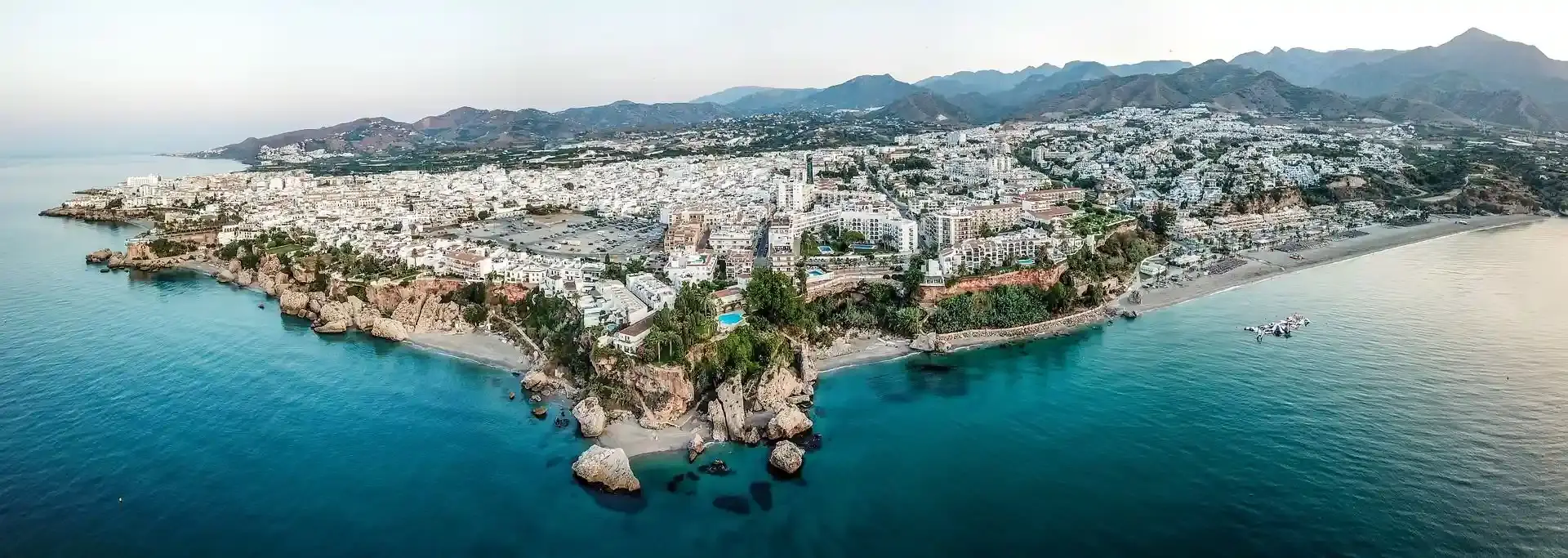
For almost four centuries Nerja and Maro lived from sugar cane: the sugar mills brought both villages back to life at the end of the 16th century, and the last factory closed in 1968. Traces of that era remain, from a four-tier aqueduct to ruins by the river Chíllar. This route links them from west to east, from Nerja to Maro.
The route at a glance
- Route: from the centre of Nerja to Maro, about 5 km. You can walk or cycle (since 2026 there has been a continuous cycle lane between Nerja and Maro) or drive, stopping at each point.
- Time: half a day at a relaxed pace.
- Note: most of the mills are ruins or private property: you see them from outside.
1. Nerja Museum: to understand the story
Start at the Nerja Museum in Plaza de España. Its room on modern Nerja has a section on sugar cane —growing, production and sale— and on the mills, with models of the Acueducto del Águila and of 18th-century Maro.
2. San Antonio Abad mill (the Old Mill)
Nerja’s first sugar mill, on the right bank of the river Chíllar, by the Castillo Alto hill. It was built from 1591 and, to authorise it, the Crown required the nearby watchtower to be restored because of the danger of Barbary raids. It first ground cane in the 1593 harvest and closed in 1869. Today’s town grew up around this mill and the one in Maro. Some walls, with openings and the bases of staircases, still stand, in poor condition.
3. The New Mill, by the Old Bridge
Following the Chíllar, next to the Puente Viejo (Old Bridge), are the remains of the New Mill, or Nuestra Señora de las Angustias: a rubble-stone wall with a round arch and another with bricked-up arches. Ten Nerja farmers founded it in 1805 so as not to depend on the town’s only mill, then owned by people from Frigiliana, but the competition bought it and closed it around 1830. From here the riverside path along the Chíllar runs down to the sea.
4. The San José factory, now the El Chaparil school
Nerja’s last big factory. It was founded in 1870 by Vicente Martínez Manescau, who soon sold it to Martín Larios, and it was the most important in the area until it closed in 1968. Its buildings now house the IES El Chaparil secondary school, by Calle Antonio Ferrandis “Chanquete”, near the Parque Verano Azul. It is a school: you see it from the street.
5. Acueducto del Águila
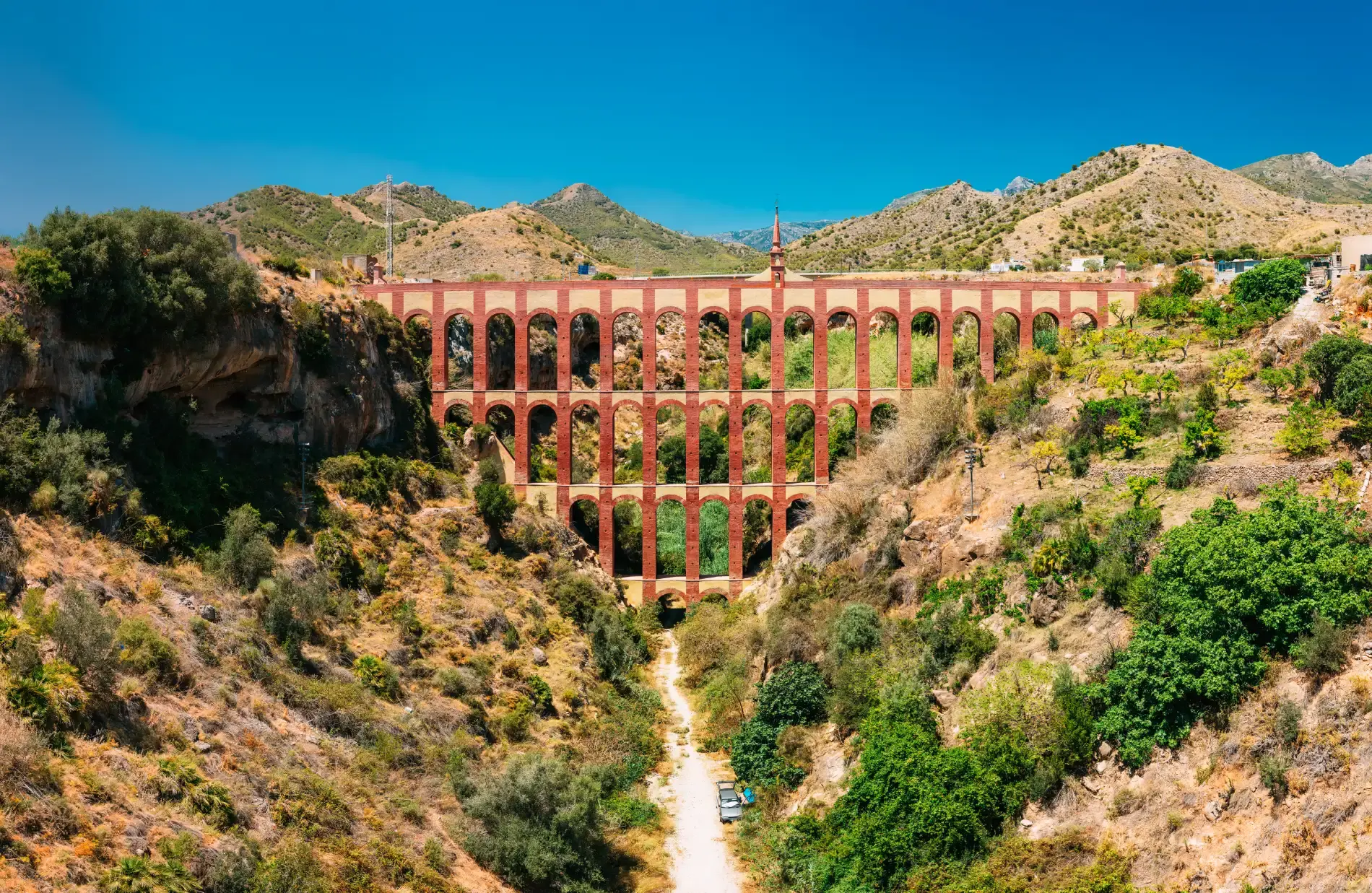
On the way to Maro, in the La Coladilla ravine, stands the most spectacular work of the period: the Acueducto del Águila, four tiers of brick arches built in the 19th century by the Nerja master builder Francisco Cantarero to carry water to the San Joaquín factory. There are places to pull over on both sides of the road, and a stretch of the Roman road survives next to it.
6. San Joaquín factory (Las Mercedes)
The Maro sugar factory was born of the 1879 Farming Colonies Act on the Las Mercedes estate. It produced sugar and distilled alcohol, and the site had 24 workers’ houses and the owner’s small palace with gardens. In 1930 Larios bought it. Today it is a privately owned ruin on Hispania Nostra’s Red List: view it from outside.
7. Maro mill (Armengol)
In Maro itself, by the road down to the beach, are the remains of the mill founded in 1585 by Felipe de Armengol, a member of the Royal Court of Granada, with walls of travertine ashlar, arches and the buttress that props it up over the ravine. It closed in the 1870s after a fire. Today’s Maro grew up around it.
To finish: cane honey in Frigiliana
Cane has not completely disappeared. Six kilometres from Nerja, in Frigiliana, the Nuestra Señora del Carmen mill, dating back to 1725, is still working: it is the last factory in Europe that makes cane honey (miel de caña), the key ingredient of many traditional sweets. More in our guide to what to eat in Nerja.
Frequently asked questions
Can you go inside the mills?
No. They are ruins, private property or, in the case of San José, a school. You see them from outside. The easiest to visit is the Acueducto del Águila.
When did the sugar industry end in Nerja?
The San José factory, the last one, closed in 1968. Today only the Frigiliana mill, which makes cane honey, is still working.
Sources: Málaga Provincial Historical Archive (Andalusian Government), Nerja Town Council and visita.nerja.es, and the studies of historian Francisco Capilla Luque on Nerja’s industrial heritage.
¿Te ha resultado útil este artículo?
Valora este artículo para ayudar a otros visitantes.